Last Updated on 08/08/2026 by hercountryroots
There’s something about filling jars with herbs, spices, and vinegar that just feels like home to me. Maybe it’s because I grew up in Appalachia, where homemade remedies, garden herbs, and old family recipes were a normal part of everyday life. We canned green beans, dried herbs, put up apples, and always seemed to have something steeping on the counter. We didn’t always call them “herbal preparations”, they were just things people made and kept in the pantry.
If you’ve already made traditional fire cider, this elderberry fire cider recipe is such a fun one to try next. It has all those bold, warming flavors you expect, but the elderberries add a little richness (and that gorgeous deep purple color doesn’t hurt either).
If I’m honest here, I have a soft spot for recipes like this. Give me a Mason jar, some herbs, a cutting board, and a quiet afternoon, and I’m a happy woman. To me, it’s so satisfying to make things with my own two hands.

Now, there is one little thing to know before we jump in. Dried elderberries need to be cooked before using them in this recipe, so we won’t toss them straight into the vinegar with everything else. It sounds like an extra step, but I promise it’s an easy one, and I’ll show you exactly how I do it.
After that, the hardest part is waiting. You’ll fill your jar with fresh horseradish, garlic, onion, ginger, cinnamon, cayenne, and apple cider vinegar, then let time do its thing for a few weeks. Once it’s ready, you’ll strain it, stir in your prepared elderberries and a little raw honey, and pour it into jars.
I’ always so happy to line a few finished jars up on the counter. It reminds me that some of my favorite things in the kitchen aren’t complicated at all. They’re slow, they’re simple, and they give me an excuse to turn on a little music, light a candle, and stay home for the afternoon (which is one of my favorite places to be anyway).
What Is Elderberry Fire Cider?
Elderberry fire cider is simply an elderberry-infused version of the traditional herbal vinegar. It has the same fiery, tangy character you expect from fire cider, but the elderberries bring a deeper berry flavor and beautiful color to the finished vinegar.
The combination of spicy horseradish, garlic, ginger, and cayenne with tart elderberries makes for a pretty lively little concoction. The raw honey added at the end helps round everything out without taking away the bite.
One important difference with this recipe is how we handle the elderberries. They need to be properly cooked before consuming, so they aren’t added raw to the vinegar. I’ll walk you through that step below.
Benefits of Elderberry Fire Cider
There’s a reason elderberries have earned a spot in so many old-fashioned herbal kitchens. They are naturally rich in anthocyanins and other antioxidant compounds, and they’ve been used traditionally in herbal preparations for generations.
Adding elderberries to fire cider gives this spicy herbal vinegar a few things that the traditional version doesn’t have. Along with their deep color and tart berry flavor, elderberries contain naturally occurring plant compounds that have been studied for their potential role in supporting overall wellness.
A Rich Source of Plant Compounds
Elderberries are especially known for their anthocyanins, the antioxidant compounds responsible for their deep purple-black color. Antioxidants help protect cells from oxidative stress, which is one reason colorful berries have long been valued as part of a nourishing diet.
A Traditional Winter Herbal
Elderberries have a long history of use in traditional herbal preparations, particularly during the colder months. While modern research is still looking at exactly how elderberry may support health, it remains a popular ingredient in syrups, teas, tinctures, and other homemade herbal preparations.
Pungent, Warming Ingredients
The elderberries aren’t working alone in this fire cider. Horseradish, garlic, ginger, and cayenne all bring their own strong flavors and plant compounds to the jar. The result is a warming, pungent herbal vinegar that’s especially welcome when the days are cold and you’re craving something with a little fire to it.
A Simple Way to Use Elderberries
Not everyone wants to make a complicated herbal preparation. That’s part of what I like about elderberry fire cider. You’re combining a handful of familiar ingredients into something you can keep in the refrigerator and use in everyday cooking.
Try a splash in a homemade vinaigrette, stir a little into warm water or tea, or use it anywhere you’d normally reach for a bright, tangy vinegar.
Elderberry Fire Cider Recipe for Gut Healing and Immune Support
Ingredients
For the Elderberry Preparation
- ½ cup dried elderberries
- 2 cups water
For the Fire Cider
- ½ cup fresh horseradish root, peeled and roughly chopped
- ½ cup fresh garlic cloves, roughly chopped
- ½ cup yellow onion, roughly chopped
- ¼ cup fresh ginger root, sliced
- ¼ teaspoon cayenne pepper, or more to taste
- 1 cinnamon stick
- 2½–3 cups raw, unfiltered apple cider vinegar, or enough to completely cover the ingredients
- ¼–½ cup raw honey, to taste
Instructions
1. Prepare the elderberries
Place the dried elderberries and water in a small saucepan. Bring to a boil, then reduce the heat and gently simmer for at least 10 minutes.
Remove from the heat and allow the elderberries to cool. Strain the berries through a fine-mesh strainer or several layers of cheesecloth, pressing well to extract the liquid.
Set the prepared elderberry liquid aside.
2. Make the fire cider infusion
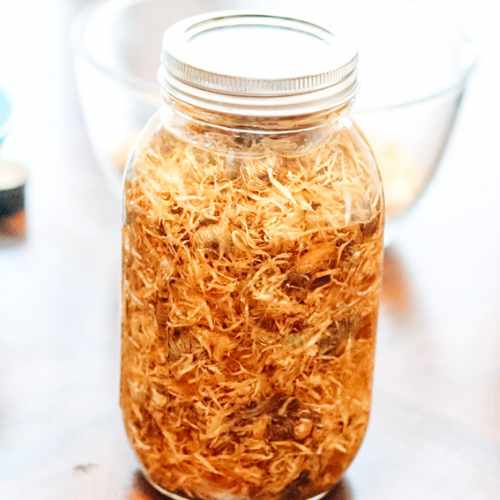
Add the chopped horseradish, garlic, onion, ginger, cayenne, and cinnamon stick to a clean quart-size glass jar.
Pour the apple cider vinegar over the ingredients, making sure everything is completely submerged. If needed, add a little more vinegar to cover the ingredients.
If you’re using a metal canning lid, place a piece of parchment paper between the lid and the vinegar to keep the acidic vinegar from contacting the metal.
3. Infuse
Seal the jar and place it in a cool, dark spot for about 4 weeks.
Give the jar a gentle shake every few days and check that the ingredients remain beneath the vinegar.
4. Strain
After about 4 weeks, strain the vinegar through a fine-mesh strainer or several layers of cheesecloth. Press the vegetables well to get as much of the infused vinegar as possible.
Discard the spent vegetables and herbs.
5. Add the elderberry
Combine the strained fire cider vinegar with the prepared elderberry liquid.
Start with ½ cup of elderberry liquid and add more to taste if you’d like a deeper berry flavor.
6. Sweeten with honey
Stir in ¼ cup of raw honey. Add more, a tablespoon at a time, until the fire cider reaches the sweetness you prefer.
If your elderberry liquid has cooled completely, there’s no need to warm the fire cider before adding the honey. If you do gently warm it to help the honey dissolve, avoid bringing the finished mixture to a boil.
7. Bottle and store
Pour the finished elderberry fire cider into a clean glass bottle or jar and label it with the date.
Store it in the refrigerator. This is a homemade preparation, not a shelf-stable canned product, so keep it refrigerated and use good judgment when evaluating it for freshness. If you notice mold, unusual bubbling or fermentation, an off odor, or other signs of spoilage, discard it.
A Note About Elderberries
Elderberries should be properly cooked before consuming. Raw or improperly prepared elderberries can contain naturally occurring compounds that may release cyanide during digestion.
When working with elderberries, remove any stems, leaves, or unripe berries that may be present. Dried elderberries should also be heat-treated before consumption. For this recipe, the berries are boiled for at least 10 minutes before they’re added to the fire cider.
Because the elderberries are prepared separately and the finished fire cider has not been tested as a shelf-stable preservation recipe, store the finished fire cider in the refrigerator. Do not can or store it at room temperature.
How to Use Elderberry Fire Cider
There isn’t really a right or wrong way to enjoy homemade fire cider. I like keeping a small jar in the refrigerator and using it wherever I want a little extra tang and heat.
You can take a small splash on its own if you enjoy the strong, spicy flavor, or dilute it in warm water or tea. It’s also delicious whisked into a homemade salad dressing, stirred into a marinade, or drizzled over roasted vegetables and other savory dishes.
If you’re new to fire cider, start with a small amount. Between the horseradish, garlic, ginger, cayenne, and vinegar, this stuff has some serious bite!
I think that’s part of the fun of making your own herbal vinegar. It’s not just something that sits in the back of the refrigerator waiting for winter—you can actually find plenty of ways to use it in your everyday cooking.
Final Thoughts
I really love making things like this at home and taking a handful of simple ingredients and turning them into something you can actually use.
You don’t need anything fancy (no fancy tools or products). You really just need some good ingredients, a jar, a little patience, and that’s about it.
And don’t be afraid to make it your own. If you like more heat, add a little more cayenne. If you want it sweeter, add a little more honey. That’s one of the best parts of making your own herbal preparations… you can adjust them to suit your own kitchen and your own taste.
This is the kind of recipe I like having tucked away in the refrigerator when the weather turns cold. It’s spicy, tart, a little sweet, and definitely has some kick.
Give it a try, and don’t worry too much about getting it perfect. That’s the beauty of making things the old-fashioned way.

About The Author

Kacie is a wife, homeschool mom of 4 boys, holistic esthetician, and a sixth-generation homesteader with a passion for natural and sustainable living, creating a home that educates the mind and nurtures the soul, and reclaiming our independence like our ancestors before us.